
Florida's Amendment 3: What It Means for Property Taxes in 2026 and Beyond
I get asked about Florida property taxes all the time. Between the homestead exemption, Save Our Homes caps, and portability, it can feel like a lot to navigate. But there is something on the ballot this November that could change everything for Florida homeowners, and I want to make sure you understand it before you head to the polls.
Florida's Amendment 3, officially called "Save Our Homes from Excessive Property Taxes," was placed on the November 3, 2026 ballot by the Florida Legislature during a special session in June 2026. If it passes with 60% voter approval, it would deliver the single biggest property tax cut in Florida history.
Let me break down exactly what it would do, how it affects current homeowners, new residents, investors, and what it means if you are thinking about buying or selling on the Gulf Coast right now.
What Is Amendment 3?
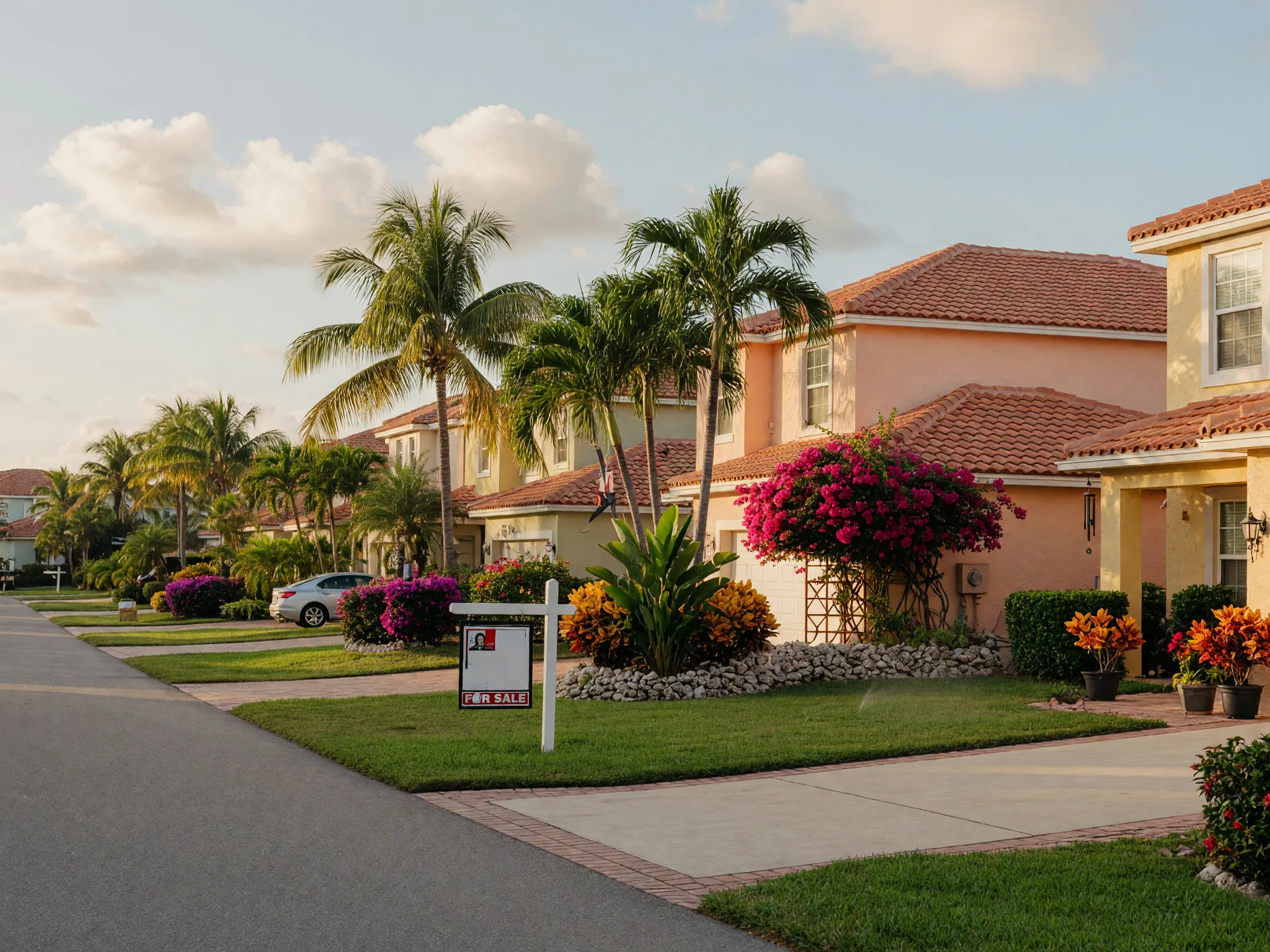
Amendment 3 is a proposed amendment to the Florida Constitution that would dramatically increase the non-school homestead property tax exemption. It needs a 60% supermajority vote to pass on November 3, 2026.
The Florida Legislature placed it on the ballot during a special session in June 2026, and it is one of the most consequential tax proposals to come before Florida voters in decades. Supporters say it puts money back in the pockets of homeowners who have been squeezed by rising property values and insurance costs. Critics say it could gut local government funding for essential services like police, fire departments, and infrastructure.
Either way, if you own a home in Florida or are thinking about buying one, this amendment matters to you.
What Would It Do for Homeowners?
Here is the meat of it. Currently, Florida homeowners who claim a homestead exemption get $50,000 off their assessed value for non-school property taxes. Amendment 3 would increase that dramatically in stages:
- 2027: The non-school homestead exemption jumps from $50,000 to $150,000
- 2028: It increases again to $250,000
- 2029 and beyond: The exemption is adjusted annually for inflation
The Save Our Homes 3% cap on assessed value increases stays in place. That is important. You still get the benefit of limited annual assessment growth, plus a much bigger exemption on top of it.
School taxes are not affected by this amendment. The exemption only applies to non-school levies, which include county taxes, city taxes, and special district taxes (things like fire districts, water management districts, and library districts).
Putting Real Numbers on It
Let me give you a concrete example. Take a home with a market value of $400,000 that qualifies for homestead exemption.
Under the current system, you get $50,000 off the assessed value. On a $400,000 home, that exemption saves you roughly $500 to $700 per year depending on the millage rates in your county and city.
Under Amendment 3 at the full $250,000 exemption, that same $400,000 home would have only $150,000 of assessed value subject to non-school taxes. That could save you $2,500 to $3,500 or more annually, depending on local millage rates.
For a $600,000 home, the savings could be $4,000 to $5,000 or more. And the exemption is inflation-indexed starting in 2029, so the value keeps up with rising home prices over time.
Those are not small numbers. That is real money that stays in your pocket every single year.
The Five-Year Wait: What New Residents Need to Know
This is the part that matters most if you are thinking about moving to Florida, or if you have recently relocated and have not yet established homestead.
If Amendment 3 passes, there is a critical deadline coming up. Here is how it breaks down:
People who already own a Florida home with homestead exemption get the full benefit immediately. If the amendment passes, your exemption jumps to $150,000 in 2027 and $250,000 in 2028, no questions asked.
But if you establish Florida residency after December 31, 2026, you do not get the full exemption right away. Instead, here is what you get:
- Years 1 through 4: Only a $50,000 non-school homestead exemption (same as what we have today)
- Year 5 and beyond: You step up to the full exemption (adjusted for inflation)
That is a five-year wait for the big savings. It creates a two-tiered system where people already living in Florida get the full benefit immediately, and newcomers have to prove their commitment first.
The deadline is real. If you want the full $250,000 exemption from day one, you need to establish Florida as your primary residence by December 31, 2026, and file your homestead exemption between January 1 and March 1, 2027.
What "Establishing Residency" Means Practically
This is not just about buying a house. To qualify for the Florida homestead exemption, you need to prove you are a bona fide Florida resident. That means:
- Getting a Florida driver's license
- Registering your vehicles in Florida
- Registering to vote in Florida
- Filing your taxes as a Florida resident
- Actually living in the home as your primary residence
The county property appraiser will look at all of these factors. This is not something you can shortcut by just buying a second home. You have to be living here.
What About Non-Homestead Properties?
If you own rental properties, second homes, or commercial real estate in Florida, Amendment 3 affects you too, just differently.
Currently, non-homestead properties (rentals, second homes, commercial, vacant land) have a 10% assessment cap. That means the assessed value cannot increase more than 10% per year, even if market values jump 20% or 30%.
Amendment 3 would drop that cap from 10% to 5% for non-school levies, starting January 1, 2027.
This is a mixed bag. On one hand, it limits annual tax increases on investment properties, which is good for landlords and businesses. On the other hand, these properties still do not get the homestead exemption. So they contribute a larger share of the tax base, and the gap between what homesteaded homeowners pay and what everyone else pays gets wider.
If you are a renter, it is important to understand this dynamic. Landlords pass property tax costs through to rent. If non-homestead properties continue to carry a heavier tax burden, that pressure can show up in your rent. It is not a direct link, but it is a factor.
The Pros and Cons
I try to give my clients the honest picture on everything, and this amendment is no different. There are real trade-offs here.
What I Like About It
- Massive tax savings for existing Florida homeowners. For the family living in a modest $400,000 home, saving $2,500 to $3,500 a year is significant. That is real money for real families.
- Makes Florida even more attractive for retirees and remote workers looking to relocate. Lower taxes have always been part of Florida's draw, and this amplifies it.
- The 3% Save Our Homes cap stays protected. That cap is a cornerstone of Florida property tax policy, and this amendment keeps it intact.
- Could increase property values as demand rises. If taxes are lower, more people want to live here, and that demand pushes values up.
What Concerns Me
- New residents face a five-year wait for full benefits. If you move to Florida in 2027, you pay the higher tax rate for four years before stepping into the exemption. That is a real cost for families relocating here.
- Local governments could lose significant revenue. Estimates put the statewide revenue loss at around $12 billion. That money funds things like fire departments, police, roads, parks, libraries, and infrastructure. If local governments lose that revenue, they will have to cut services or find new revenue sources.
- It creates a two-tiered system. People who already live here get treated differently from people who move here. Some critics argue that clashes with the idea of a single, fair property tax system.
- Renters and first-time buyers who have not established homestead yet do not benefit immediately. If you are renting and hoping to buy your first home down the road, this amendment does not help you right now.
What This Means If You Are Buying a Home in Florida Now
Here is where the rubber meets the road, especially for anyone reading this who is thinking about relocating to the Gulf Coast.
If you buy a home and establish homestead before December 31, 2026, and Amendment 3 passes, you could qualify for the full exemption in 2027. That is $150,000 off your assessed value starting next year, jumping to $250,000 in 2028.
If you buy after January 1, 2027, you start the five-year clock. You get the current $50,000 exemption for the first four years, then step up to the full amount in year five.
The practical advice: if you are considering relocating to Florida between now and the end of 2026, the clock is ticking. You have a narrow window to establish residency and lock in the full exemption. That might mean accelerating your timeline by a few months if you were planning to move in early 2027.
I am not saying rush into a decision you are not ready for. But if you are already leaning toward a move, the numbers favor acting before the end of this year.
What This Means for Sellers
If you are planning to sell your Florida home, Amendment 3 creates an interesting dynamic.
Existing homeowners could see their tax bills drop significantly if the amendment passes. That makes staying in your home more affordable, which could reduce the number of homes on the market and tighten inventory.
At the same time, lower property taxes make Florida even more attractive to out-of-state buyers. If demand increases and supply tightens, prices could push higher.
Some sellers may price their homes higher knowing that buyers will save thousands annually on taxes. But I would caution against getting too far ahead of reality. The amendment has not passed yet, and there is a legal challenge working its way through the courts.
For now, price your home based on the current market, and let the tax benefits be a bonus for buyers rather than a justification for overpricing.
Important Disclaimers
I want to be really clear about something: Amendment 3 has not been approved yet. It needs 60% voter approval on November 3, 2026. That is a high bar, and no one should assume it will pass.
There is also a legal challenge to the ballot language. A Leon County Circuit Judge is reviewing whether the ballot summary accurately describes what the amendment would do. If the court strikes down the language, the amendment could be delayed or removed from the ballot.
The information in this post is based on the current proposed language as of August 2026. It may change. Tax laws are complex, and everyone's situation is different.
I am a real estate agent, not a tax professional. For advice specific to your financial situation, consult a qualified CPA or tax attorney. I can help you understand how these changes affect the real estate market, but your tax advisor is the right person for questions about your individual return.
The Bottom Line
Amendment 3 is the biggest property tax proposal to hit Florida in decades. If it passes, it saves homeowners thousands of dollars a year. If you already live here, you win big. If you are planning to move here, the window to lock in the full exemption is closing fast.
But it also comes with real trade-offs. Local governments stand to lose billions in revenue, and newcomers face a five-year wait. Whether that trade-off is worth it is something every Florida voter will decide on November 3.
Either way, understanding these rules now means you can plan ahead instead of reacting later. And that is exactly how I try to help my clients navigate every decision, big or small.
Have questions about how Amendment 3 affects you? Let's talk.
I'll give you a straight answer based on your specific situation - no jargon, no sales pitch.
Not sure how Amendment 3 affects your situation? Let's talk it through.